News Story
Dean Graham: The Next Five Years

What does it take to turn an engineer’s intellectual energy into solutions for society’s biggest challenges?
For Dean Graham, it starts with bringing the right people together— and creating the right environment where innovators can succeed.
On a recent afternoon, the Maryland Robotics Center hummed with University of Maryland students and researchers tackling what Clark School Dean Samuel Graham calls “big challenges.”
With an admiring smile, Graham watched a 3-foot humanoid and a 5-foot robotic dog maneuver about while a small team fine-tuned how the machines could assess people’s breathing and other vital signs to one day help triage disaster victims.
Nearby, other students refined a space rover designed to collect soil samples, take photos, and track its own whereabouts on Mars. Another group analyzed the soft, tong-like “grippers” they’d made on a 3D printer to help doctors at Children’s National in Washington, D.C., take biopsy samples from their tiniest patients.
While visiting with each group, Graham listened intently before the researcher in him lit up with questions: What are you using for sensors? Does the robot use an intelligent power management scheme? Would your materials be safe inside an infant’s body?
“That’s really cool,” Graham marveled upon hearing the designs explained.
It was the kind of hands-on learning and high-impact research that Graham championed throughout his first five years leading the A. James Clark School of Engineering.
“When I walk into a lab, I always see the passion and energy from our students, along with new challenges they are working on,” he said. “I love giving students an opportunity to create.”
Bring the Right People Together
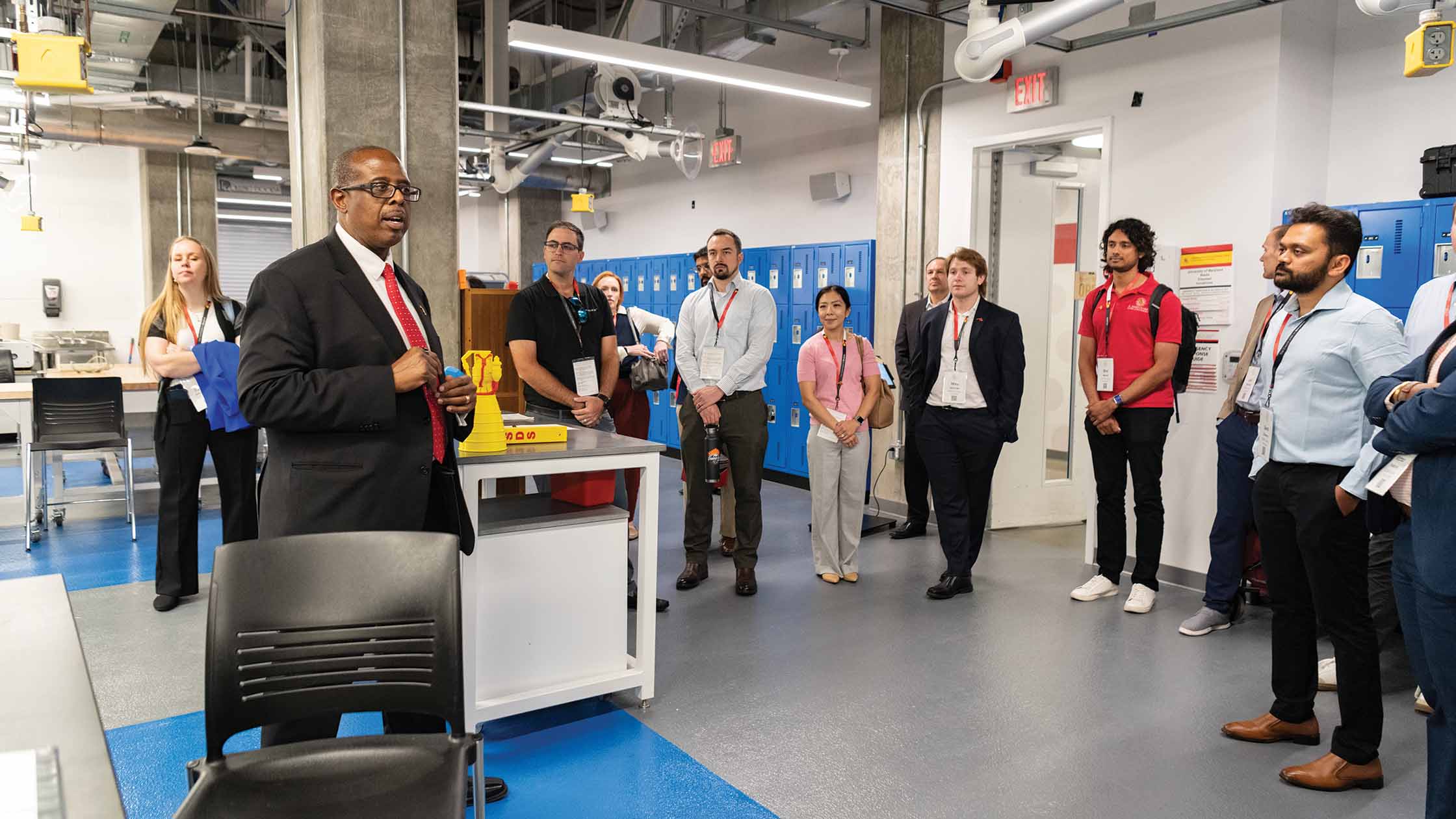 This year’s class of the Early Career Distinguished Alumni Society—an exclusive professional network of Maryland engineers leading the next generation of innovators, entrepreneurs, and change agents—tours the E.A. Fernandez IDEA Factory.
Since being reappointed to a second five-year term in June, Graham remains laser-focused on channeling academia’s intellectual energy into improving everyday lives, now and in the future.
Developing reliable and responsible robots. Creating intelligent manufacturing systems. Advancing semiconductor and quantum technologies. Collaborating with doctors to develop medical treatments and devices. Building autonomous drones that can deliver medicines to rural areas or work with first responders to save lives, and more.
“I like being in the room to discuss how we can tackle challenging problems that could have a lasting impact on our society,” Graham said.
“You need to bring the right people together to come up with solutions,” he added. “To create these innovations, the Clark School puts a premium on building collaborations, both within the university and across the nation.”
Embrace Challenges, Strive for Excellence
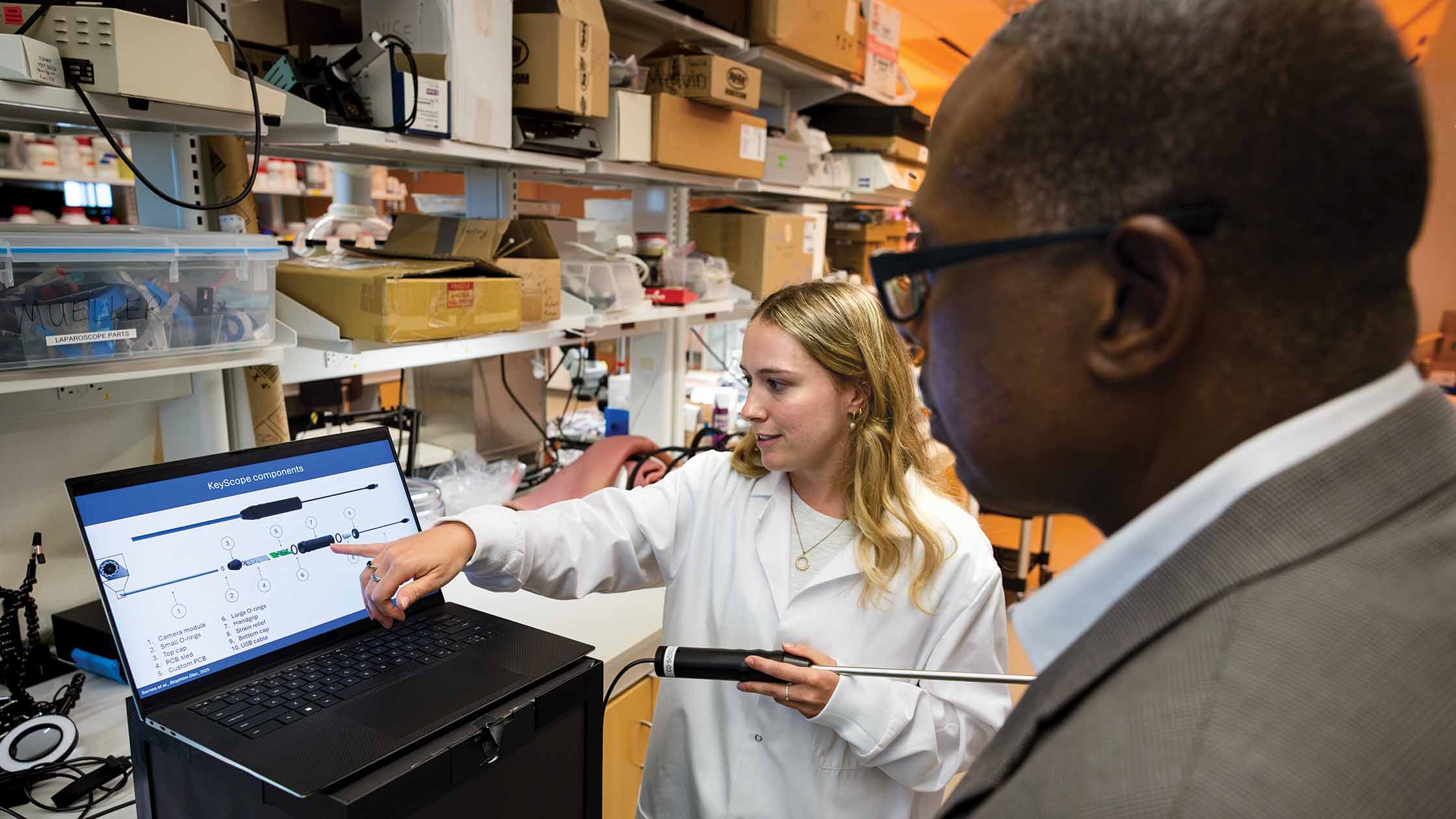 A durable, reusable laparoscope developed by Maryland bioengineers and colleagues could help prevent deaths in low- and middle-income countries.
The ability to work and get along with different people was baked into Graham’s childhood.
His father’s Army career required moving every few years between bases in Germany, Maryland, Texas, Georgia, and other locations throughout the South. He eventually spent his high school years in Sumter, S.C.
His parents taught him and his four siblings the values of working hard, respecting their teachers and mentors, embracing challenges, and striving for excellence.
Though he worked hard in school, Graham said, he didn’t know many college graduates—let alone engineers—while growing up. But high school teachers who saw his strong grades and AP test scores pointed him toward summer programs at the University of South Carolina and Clemson University. There, he would develop a long-running interest in mechanical engineering and advanced materials.
While majoring in mechanical engineering at Florida State University, Graham joined his siblings as the first in their family to attend college. He remembers the invaluable support they received through scholarships and the vital experiences of doing research and internships. Today, his siblings work as a federal judge, a patent lawyer, a nurse practitioner, and a senior executive of a mortgage company.
“Our family’s been blessed,” he said. “It’s clear to see that the work ethic and not being afraid to take on challenges have been passed down to us from my parents.”
Provide Opportunities
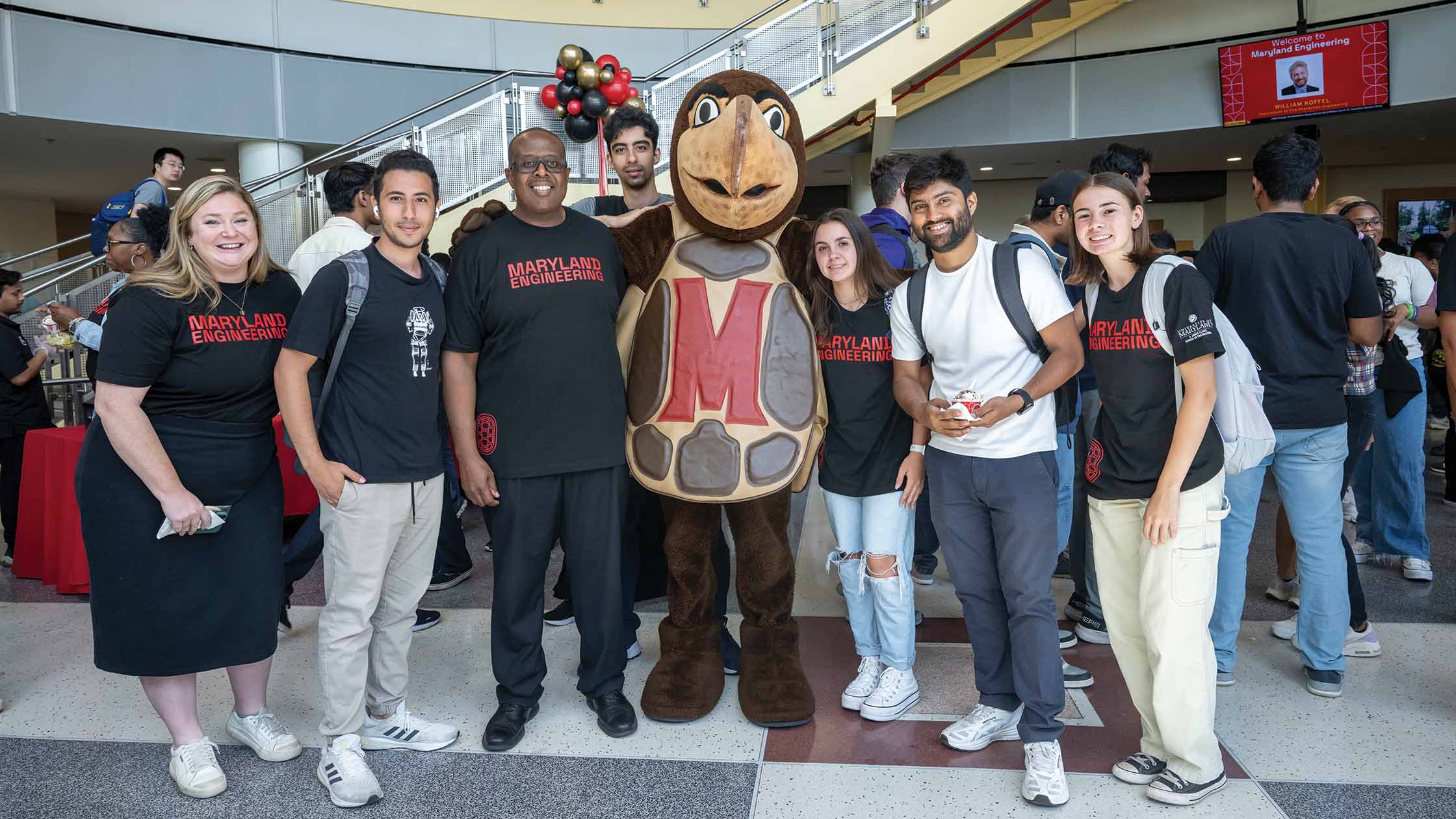 At the annual welcome back celebration, Dean Graham kicks off each new academic year with Clark School students, staff, and faculty.
Like the teachers who mentored him, Graham said, he encourages students who initially might not think of themselves as engineers, including those from underserved communities. As a first-generation college student himself, he appreciates that students often need help to understand the opportunities available and learn to ask the right questions to evaluate them.
“I was fortunate that someone gave opportunities to me, so I want to create opportunities for others,” Graham said. “I want to help people who have the talent, regardless of their background, get into these fields and succeed.”
His passion is playing out in West Baltimore, home to Terrapin Works Baltimore, UMD’s newest makerspace. Graham teamed up with Tim Regan ’77, president and CEO of construction firm Whiting-Turner, and others to create a welcoming place where local children and residents can develop problem-solving skills using 3D printers, a laser cutter, and other high-tech tools.
Graham said he wants the makerspace to fuel users’ creativity and boost their self-confidence. He wants them to know they can solve problems in their community and for the world, regardless of whether they go on to pursue an engineering degree or a trade job.
“We want to inspire people so they know that their innovative thoughts can be turned into something physical,” he said. “You can actually go solve the problem. You don’t have to wait for someone to do it for you.”
Forge Connections
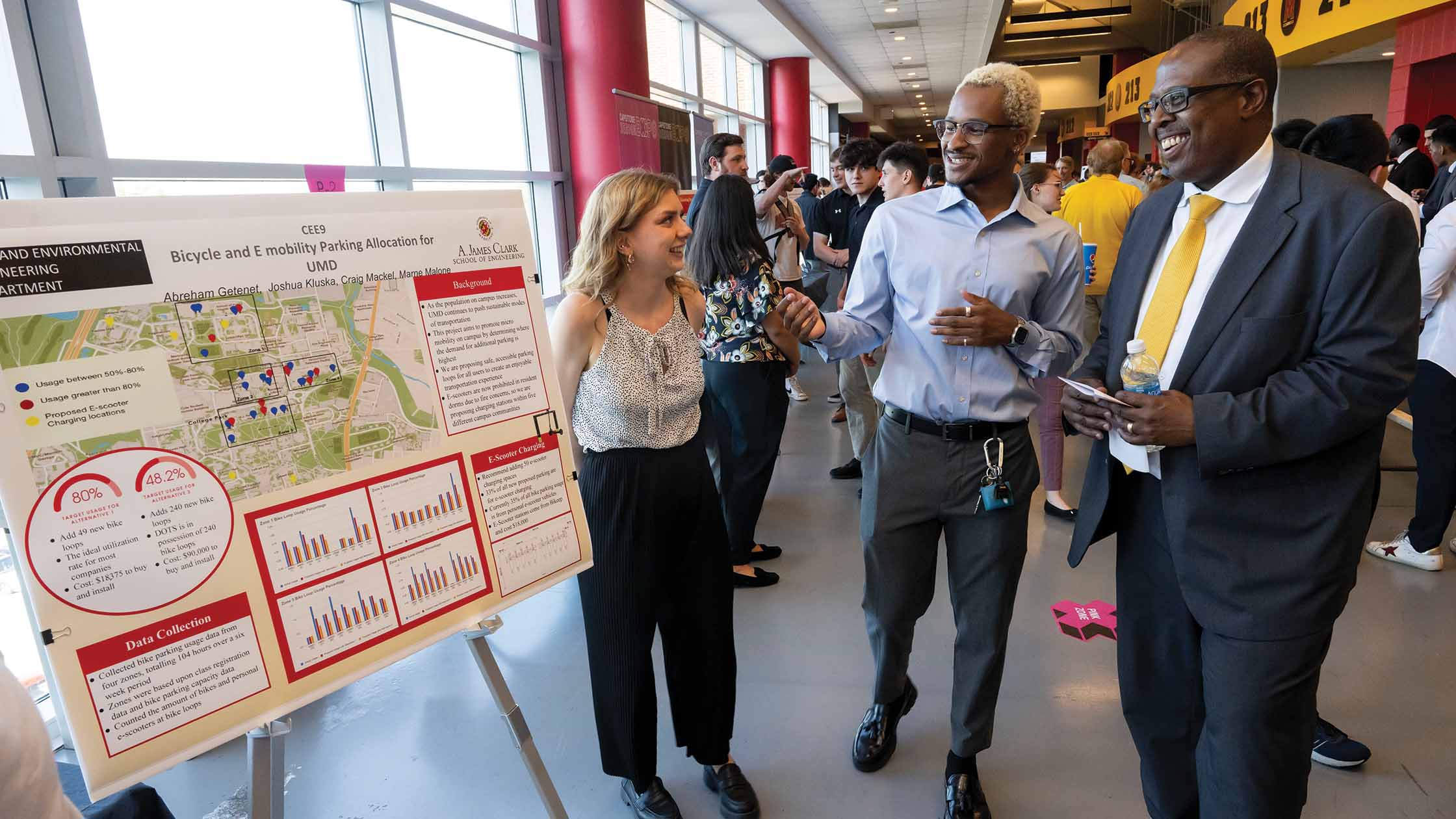 Clark School seniors showcase their solutions to societal challenges at the annual Capstone Design Expo.
Graham arrived at Maryland in 2021 from the Georgia Institute of Technology. It’s where he had earned his Ph.D. in mechanical engineering and later worked for 18 years, first as a professor and eventually as chair of the George W. Woodruff School of Mechanical Engineering.
Georgia Tech Provost Raheem A. Beyah, who worked with Graham there, said he was best known for his award-winning, high-impact research—on top of being collaborative, easy to talk to, and “down-to-earth.”
“He’s just the nicest, most humble individual that you could ever meet,” Beyah said. “So rarely do you find that combination of exceptional scholarship and exceptional leader.”
Reflecting on his early UMD career, Graham said he’s proud of hiring “incredible” faculty and supporting students. That includes launching the annual Capstone Design Expo, where engineering seniors share their solutions to real- world problems.
He’s also forged closer connections between Maryland’s engineering school in College Park and its medical school in Baltimore: A new joint B.S.-M.D. degree for undergraduates majoring in engineering, math, physics, and computer science helps to meet the growing demand for doctors well-versed in the complexities of artificial intelligence and high-tech healthcare.
“As you look at the future of medicine, there’s more and more technology coming into play,” Graham said. “Having that foundational knowledge gives students more insight into how this technology works and why it works. They can be in the room for discussions about solutions that are needed and how to create them.”
Major new facilities that will have opened on his watch include the E.A. Fernandez IDEA Factory and the almost-completed Stanley R. Zupnik Hall. Both have cross-disciplinary, state-of-the-art lab spaces that, as Graham said, “invite people to want to work together.”
Eyes Forward
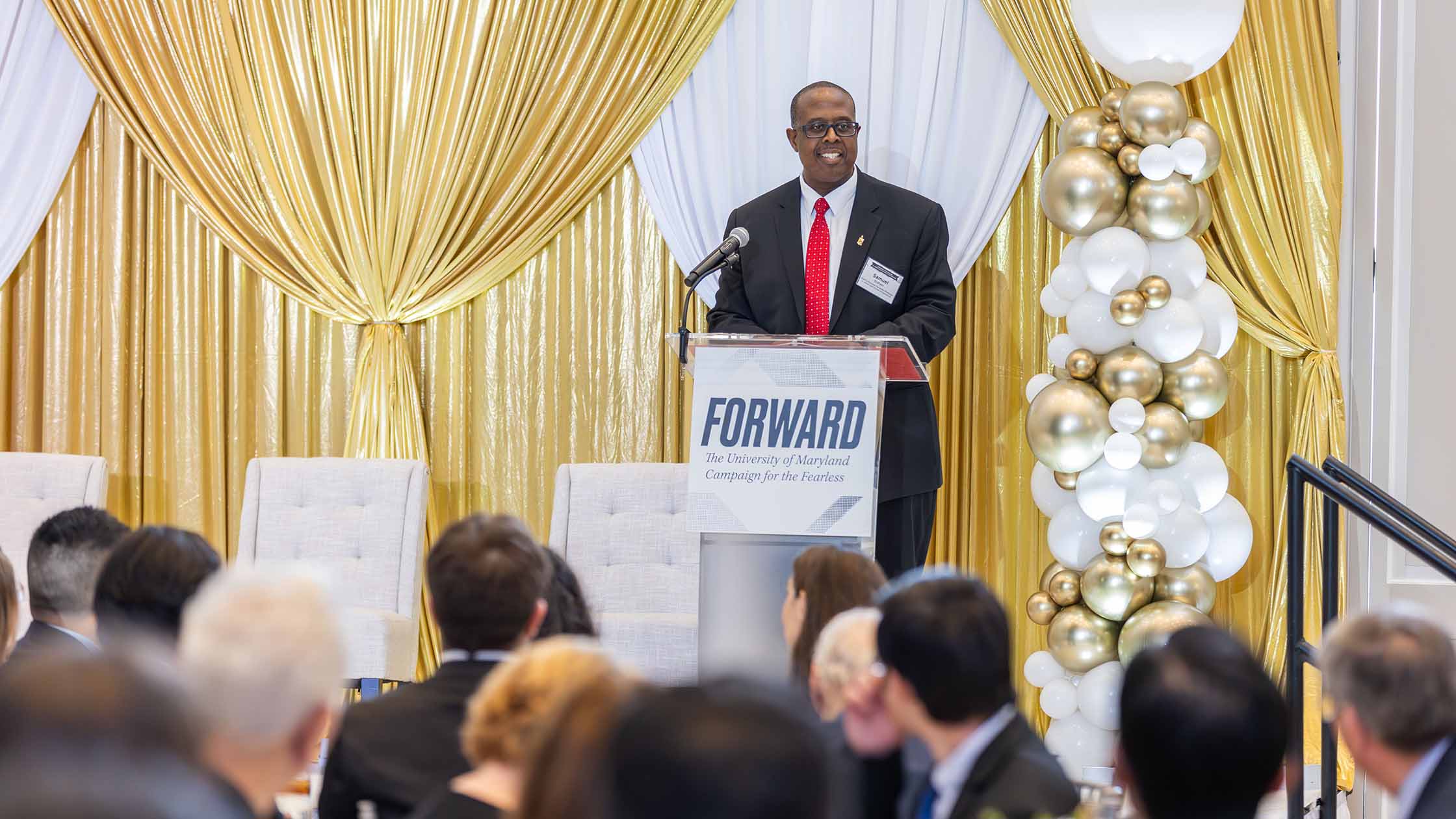 Dean Graham speaks at the Clark School’s annual scholarship luncheon, which connects donors with scholarship recipients.
Looking ahead, Graham said he’s excited to take on emerging challenges, including creating curriculum and tools for teaching students to develop and use fast-moving AI responsibly: “We want to make sure we uphold human principles as we design these technologies.”
He’d also like to help quantum engineering students and researchers turn their lab discoveries into market-ready technology. Another priority: Continuing to support UMD research that helps save lives, including therapies to prevent and cure cancer, devices that use AI, and ways to reduce the cost of—and increase access to—such solutions.
When he can take a break from his leadership duties, Graham likes to get back to his own award-winning research: helping next-gen electronics work more effectively and last longer by pulling heat from the high-performance microchips that power them.
He also enjoys photography, listening to live music, and spending time with his wife, Shalonda, who works as a corporate accountant, and their children, Camryn and Sheldon, who both majored in engineering.
He said he looks forward to continuing to help Clark School students, faculty, and researchers have a transformative impact on society through engineering.
“Maryland is one of the top places to pursue an engineering degree,” Graham said. “We have engineers here who want to take on these big challenges. My role is to provide the right environment to encourage them to tackle big problems—and succeed.”
Article by Katherine Shaver
Published November 17, 2026
Related Stories
Stories / November 5, 2026
UMD Faculty Recognized for Program Development

Stories / October 26, 2026
Nature Inspires Better Underwater Robots at UMD

Stories / September 14, 2026
Project, Problem, Solution: MATRIX Interns Make an Impact
Stories / August 26, 2026
Graham Named Honorary ASME Member

Stories / August 19, 2026
Smooth Sailing: MATRIX Dives Into Ship Inspecting

Stories / July 23, 2026
New Graduate Program Teaches Real-World Autonomy Skills

Stories / June 25, 2026
Grand Challenges 2.0: Engineers Partner to Unlock Solutions

Stories / June 25, 2026
Aircraft May Refuel Themselves - With Help From AI

Stories / June 24, 2026
Dean Graham Reappointed to Second Five-Year Term

Stories / May 28, 2026
Generations of Graduates: A Full-Circle Celebration