News Story
Terrapin Works Baltimore Launches Community Makerspace

In West Baltimore, a new kind of classroom is taking shape, one where students design, build, and bring ideas to life. At The Village at Mondawmin, Terrapin Works Baltimore—the first community-facing Terrapin makerspace—is inspiring creative thinking and opening doors to engineering pathways through hands-on learning and collaboration.
Through classes and open shop hours, students, youth, neighbors, and program partners can explore, learn, create, and foster connections through the power of making.
Inspiring the next generation through the power of making
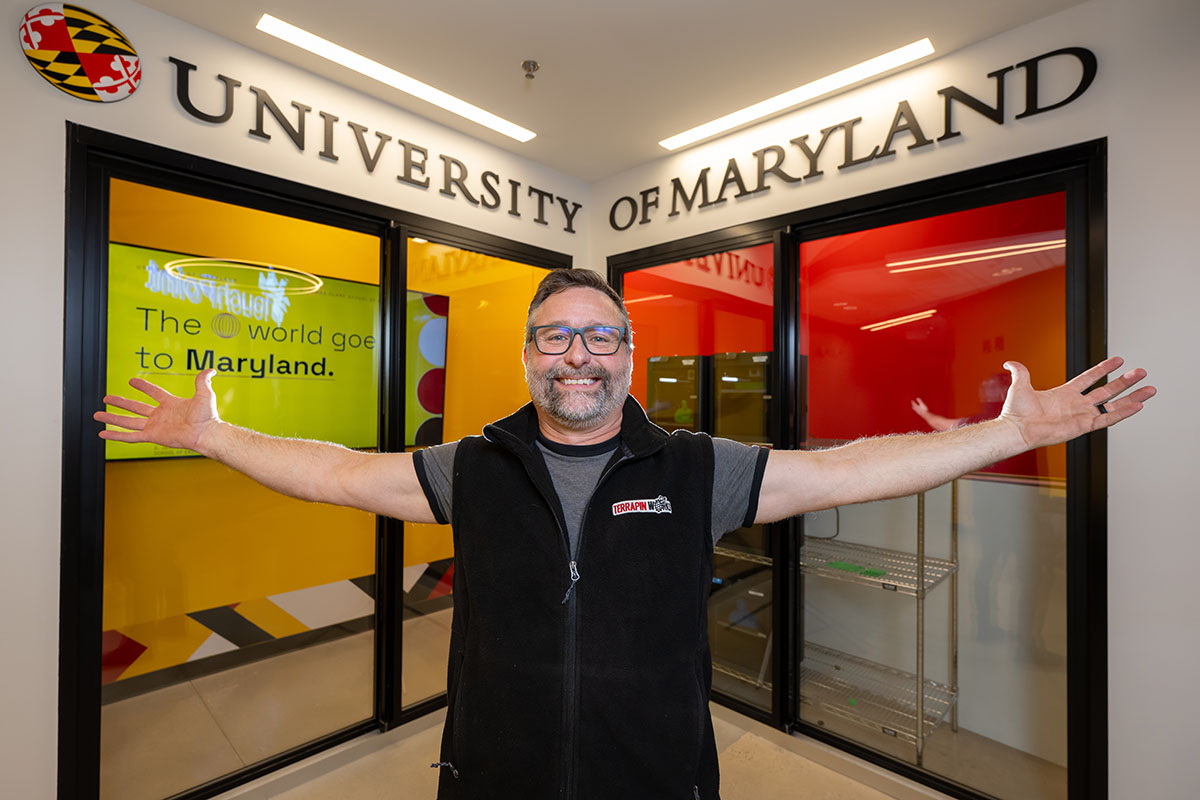
Brian Palmer welcomes guests to Terrapin Works Baltimore (Photo by Maximilian Franz)
Hands-on design and build experiences—using simple hand-held tools, computer-aided and even additive and subtractive manufacturing tools—cultivate competence in basic STEM concepts while encouraging problem solving and innovation. By facilitating the engineering design process, makerspace projects are aimed at building real-world skills and confidence in community members at all ages and stages.
This is the beginning, says India Alexander, faculty specialist for Experiential Learning Programs at UMD’s A. James Clark School of Engineering, who has developed and coordinated a series of experiential learning events that have reached hundreds of students and families across Baltimore City. Having soft launched in 2025, Terrapin Works Baltimore is staffed with a manager, Brian Palmer, and equipped with state-of-the-art resources, including a woodshop and cutting-edge fabrication tools.
“The makerspace not only gives the university visibility in the West Baltimore community, but it also gives us a hub where we can expose students to career paths and life skills through engineering concepts and makerspace technology,” Alexander says. “With our community outreach and workshops, we’re helping K-12 students, young adults, and other community members be as creative and innovative as they want to be.”
Partnerships fuel the pipeline—and community programming
Experiential learning to foster an interest in STEM
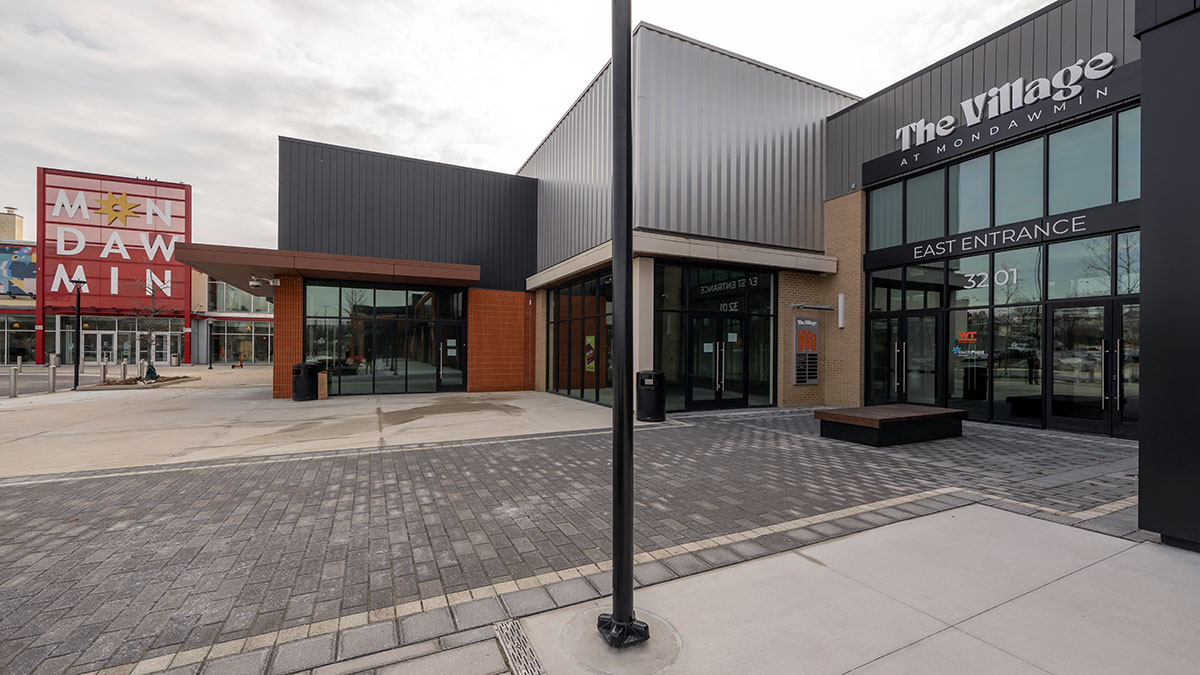
The Village at Mondawmin in Baltimore (Photo by Maximilian Franz)
In 2024, Maryland Engineering began collaborating with the Whiting-Turner Contracting Company and community partner TouchPoint Baltimore to establish the experiential learning program at The Village at Mondawmin, a hands-on introduction to engineering through design-and-build projects aimed at exposing students and families to STEM—to inspire the next generation, provide real-world skills, and also expand the engineering pipeline.
The program initially focuses primarily on K-12 outreach within the Baltimore community, fostering connections with Clark School faculty and staff, undergraduate students, and community organizations and corporate partners.
Through long-term, cumulative educational offerings, these collaborations will help support students with a strong interest in STEM, guiding them successfully through their higher education journey wherever it may lead.
In 2024 and 2025, Baltimore City students and families engaged in diverse programming including a STEM fair, a career exploration day, a community festival, and workshops that gave students hands-on experience learning about engineering fundamentals and disciplines and the engineering design process, while learning how STEM can be applied to global sustainability.
Field trips to work sites and college makerspaces
Outside of the Mondawmin site, students experienced a field trip where they met industry professionals and toured a construction site at Morgan State University.
They also traveled to College Park for a tour of UMD’s campus—the first college visit for many participants—and a visit to UMD’s Terrapin Works, where they explored 3D printing and laser cutting.
Introducing pilot workshops for local student groups
(Photo by Maximilian Franz)
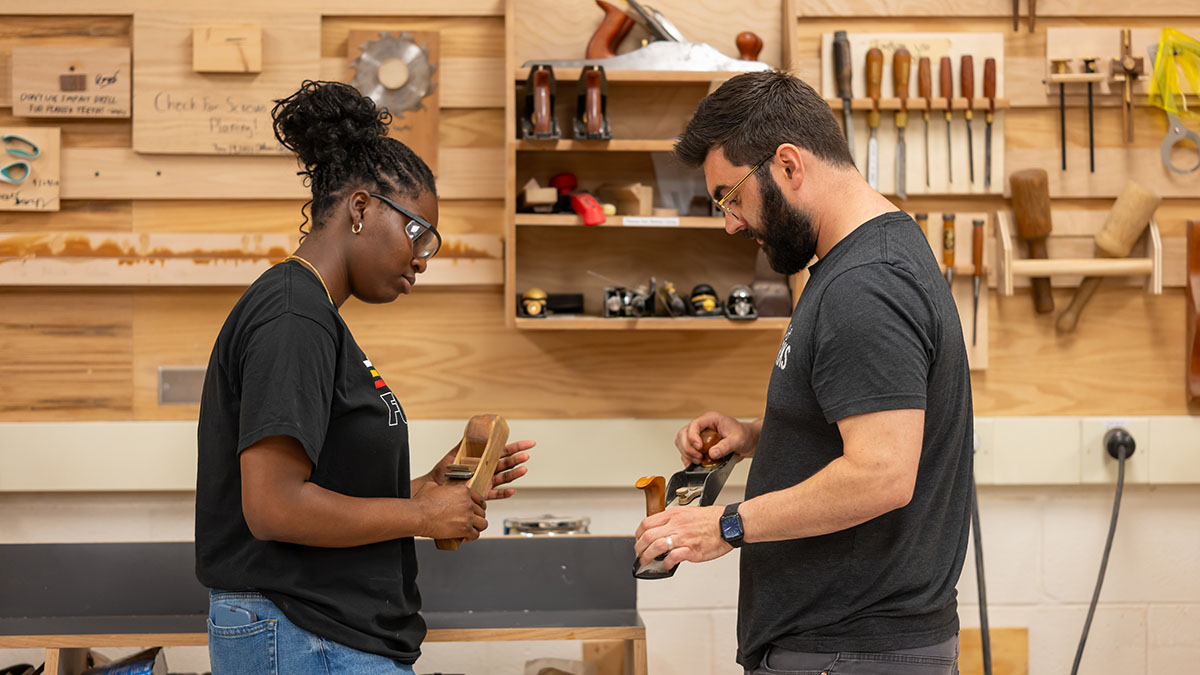
In late 2025, Terrapin Works Baltimore activated its makerspace with several pilot workshops tailored especially for local student groups, including school-based community nonprofit Harlem Lacrosse Baltimore.
The workshop introduced high school students to 3D printing through a hands-on exploration of fused deposition modeling technology. Using beginner-friendly computer-aided drafting software and printing tools, the participants were instructed in the designing, slicing, and printing of a miniature lacrosse stick, while learning from a session facilitator how engineers use this technology for real-world applications, including sports equipment, medical prosthetics, and footwear.
“They came in curious,” Alexander says of the students. “They learned how to do 3D modeling and how to send the design to the printer. They learned the code. By the end they were all working in teams—and excited.”
A space for innovation and skills-building
Providing 3D printing, laser cutting, and fabrication equipment for Baltimore residents and students, the community partnership has brought STEM technology—among many other investments—into community spaces. “The makerspace’s long-term vision of “uplifting students in the community with more access, more skills, and more options,” is within reach, Alexander says.
A woodshop and prototyping lab anchor the space
(Photo by Maximilian Franz)
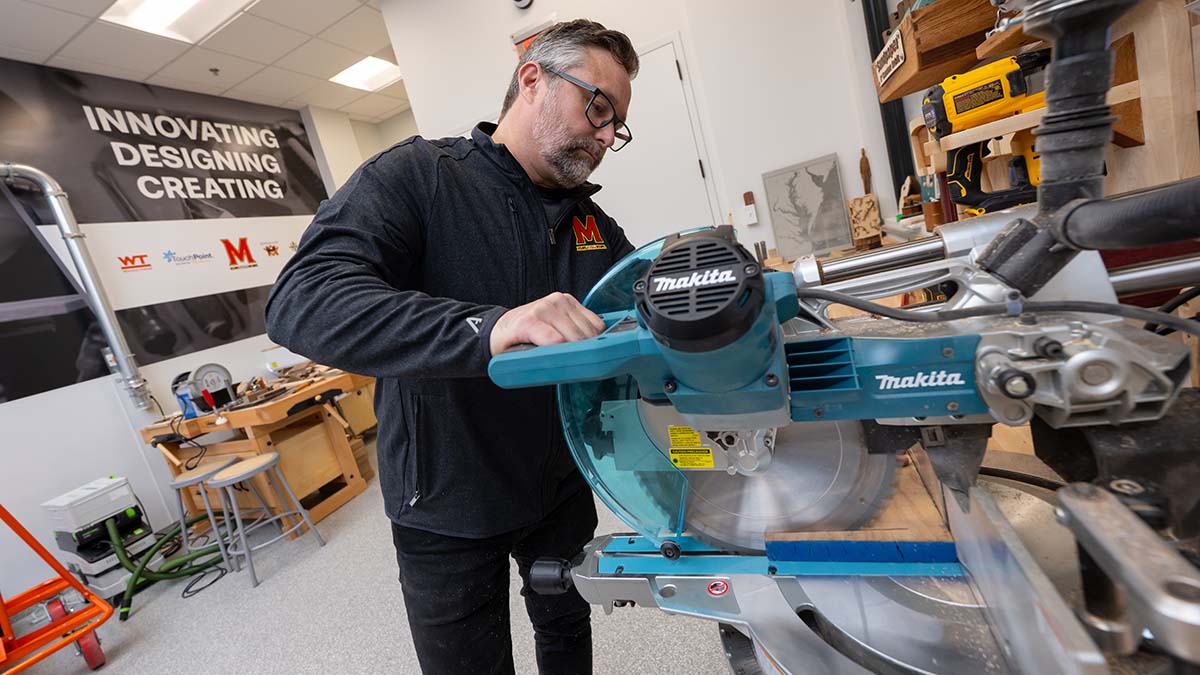
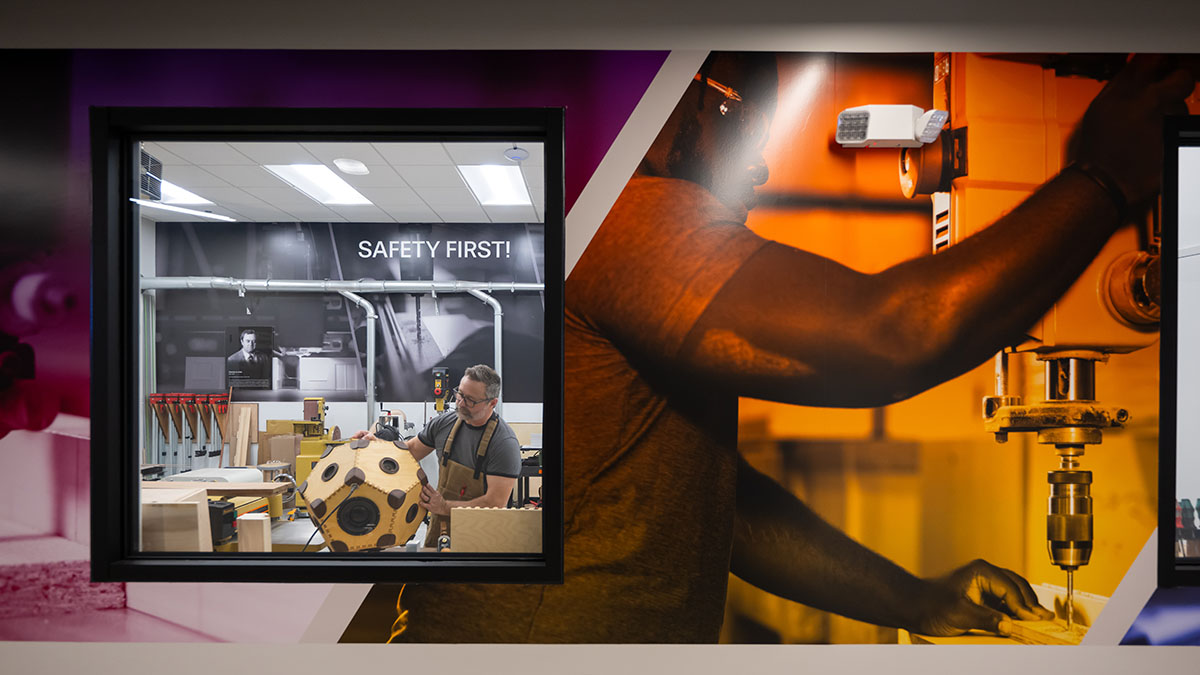
Two main rooms comprise the makerspace: an approximately 18-by-35-foot woodshop with professional woodworking equipment plus entry-level tools, such as coping saws, for younger and less-experienced students.
“It’s a working woodshop and also a showpiece,” says Palmer, who manages the Baltimore makerspace and works with Terrapin Works in College Park, where there are 15 on-campus makerspaces, to coordinate efforts. “Because of our location in The Village at Mondawmin, facing into the rest of the building, there’s a lot of foot traffic. It’s a way to get people aware of our partnership.”
An approximately 10-by-18-foot prototyping lab catering to digital design projects houses computers, 3D printers, power supplies, breadboards for circuit building, and soldering stations. In an attached display space, two large and two smaller monitors continually run UMD content providing more advertising for the makerspace partnerships; further plans for the space include displays of student projects.
Room to grow
Among potential future pathways and opportunities, Alexander lists experiential learning modules, cumulative series, micro-credential certification courses, and the possibility of makerspace interns and contractors to ensure students and community members are gaining cumulative skills and career options.
Collaboration and looking ahead
(Photo by Maximilian Franz)
Spring 2026 plans for the makerspace include a 3D printing workshop and a rapid prototyping workshop for area high school students, where they will use woodworking hand tools to build a model of a new Francis Scott Key Bridge—adding a local, real-world design element to the project.
Maryland engineering majors will likely serve as facilitators.
Expanding Opportunities—and Solutions—Around the State
Terrapin Works Baltimore is part of a powerful network of partnerships and programs around the state of Maryland helping to accelerate solutions to the most pressing problems facing our state, nation, and world:
- In Southern Maryland, the MATRIX Lab anchors the state’s autonomy corridor, providing researchers with unparalleled resources to research, design, manufacture, and test the next generation of artificial intelligence (AI) and autonomous systems.
- In Prince George’s County, educators are empowering thousands of rising high schoolers each year through the Get Outside and Learn Engineering Kit Program and other initiatives that jumpstart engineering learning.
- In Shady Grove, college students are preparing for the next wave of health care utilizing AI and big data.
- In Baltimore, the Edward and Jennifer St. John Center for Translational Engineering in Medicine joins together Fischell Department of Bioengineering faculty with the University of Maryland School of Medicine to develop and translate next-generation bioengineering technologies that drive research and innovation in the development of interventions that improve patients’ lives.
And Terrapin Works Baltimore is igniting imaginations, developing skills, expanding the engineering pipeline, and helping to inject new investment in West Baltimore.
Published April 9, 2026
Related Stories
Stories / November 21, 2024
Project Embraces Tribal History With Modern Technology
Stories / Sep 22, 2026
Two Years Running, Maryland #12 Among Publics for Undergrad...

Stories / Sep 15, 2026
Honoring Achievement: Celebrating Latine Heritage Month

Stories / Sep 14, 2026
Project, Problem, Solution: MATRIX Interns Make an Impact

Stories / Sep 3, 2026
Professor Derek Paley Named ASME Fellow

Stories / Aug 26, 2026
Graham Named Honorary ASME Member

Stories / Aug 19, 2026
Smooth Sailing: MATRIX Dives Into Ship Inspecting

Stories / Aug 13, 2026
UMD Lauded at DARPA Lift Challenge

Stories / Aug 10, 2026
Gut Monitoring "Smart Pill" Testing Advances

Stories / Aug 7, 2026
Two Patents Awarded to UMD Researchers

Stories / Jul 23, 2026
New Graduate Program Teaches Real-World Autonomy Skills
