News Story
University of Maryland Research is Redefining Health Care

First author Dr. Reza Ghodssi holds prototype of "smart pill"
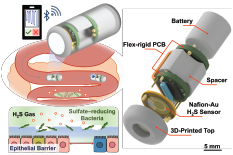
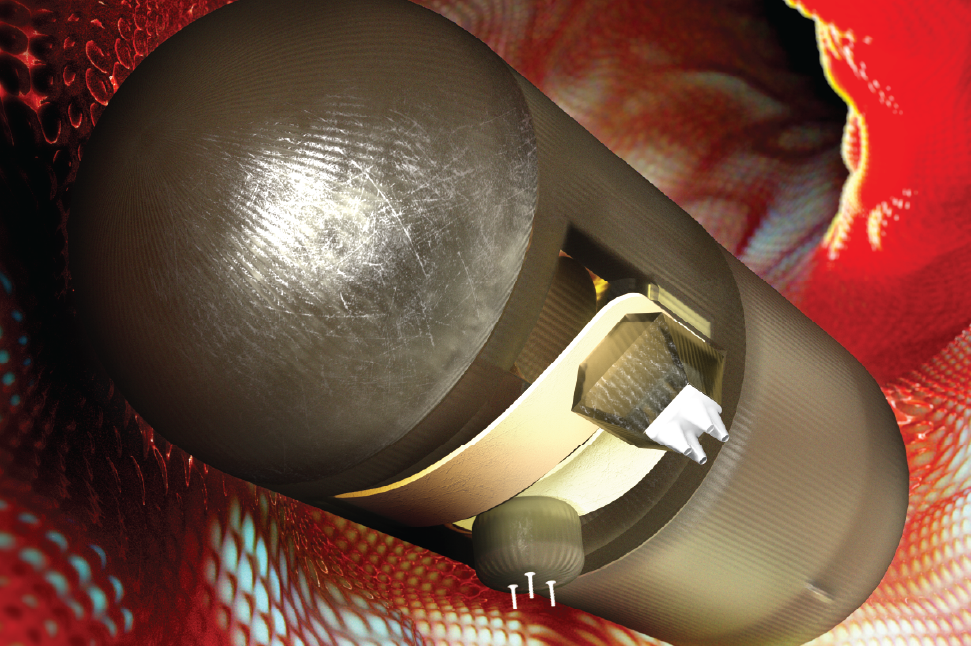
COLLEGE PARK, Md. - University of Maryland (UMD) research is now published in award-winning technology magazine IEEE Spectrum. Researchers representing UMD’s A. James Clark School of Engineering MEMS Sensors and Actuators Laboratory (MSAL) and the MATRIX Lab are developing ingestible "smart pills" that could autonomously detect early signs of disease, monitor tissue health in real time, and provide targeted treatment. The capsule would provide an alternative to invasive techniques like endoscopies when monitoring gut health. The capsule is in development and not currently available to the medical community.
"Tomorrow’s Smart Pills Will Deliver Drugs and Take Biopsies" was written by Dr. Reza Ghodssi (ECE, ISR, Fischell Institute), UMD Distinguished University Professor and MATRIX Lab Executive Director of Research and Innovation, Dr. Justin Stine, MSAL Lab Director and MATRIX Lab Director of Remote Sensing and Microsystems, and Luke Beardslee, a surgical critical care fellow at Penn State Milton S. Hershey Medical Center and a research affiliate with UMD’s Institute for Systems Research.
"These capsules have the potential to change lives for the better - even save lives. Our team’s work to develop smart pills that can sense, communicate in, and interact with complex biological environments will redefine the way we diagnose and treat ailments," Dr. Ghodssi said.
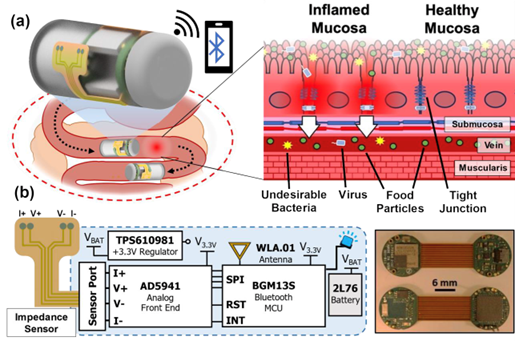
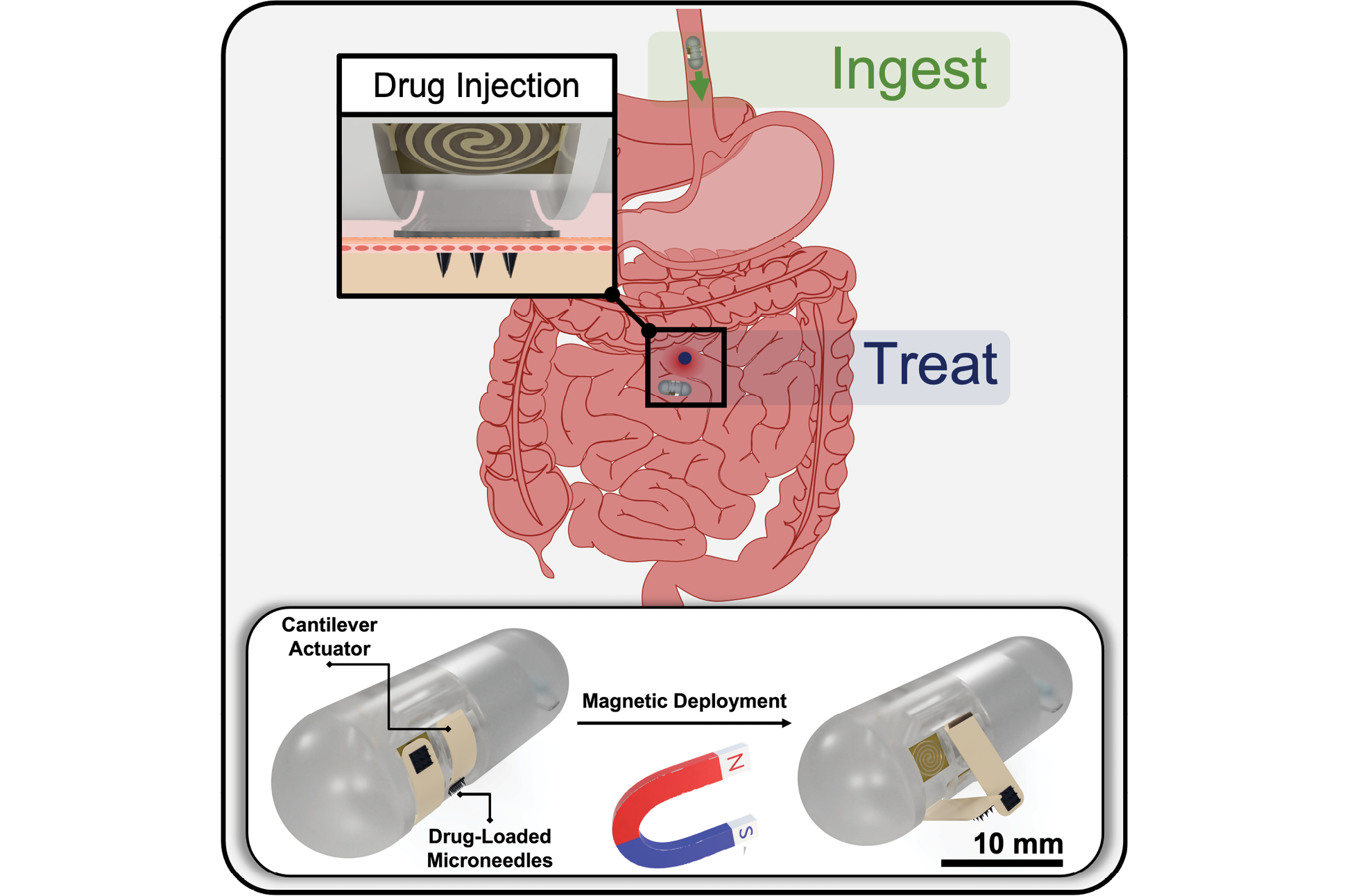
The article outlines advancements in capsule technology, as UMD researchers transform traditional time-release ingestible devices into truly autonomous "smart pills." Early iterations of their work focused on successfully getting the device to the small intestine. Newer versions can track biomarkers such as the gas hydrogen sulfide, neurotransmitters such as serotonin and dopamine, and bioimpedance - a measure of how easily ions pass through intestinal tissue. All of these advancements shed light on gut health and disease progression. Ultimately, the capsules will be able to deliver medicine in the gut exactly when and where it is needed. The localized approach improves effectiveness and minimizes side effects seen in alternative treatments. For now, next steps include working with gastroenterologists and animal-science experts to put capsule prototypes through rigorous in vivo studies, then refining them for real-world use.
Published February 20, 2026
Related Stories
Stories / August 10, 2026
Gut Monitoring "Smart Pill" Testing Advances

Stories / April 7, 2025
Research Paper and Cover Art Now Feature Article in Journal

Stories / February 11, 2025
Ingestible Capsule Advances May Lead to Earlier Detection of...
Stories / July 2, 2024
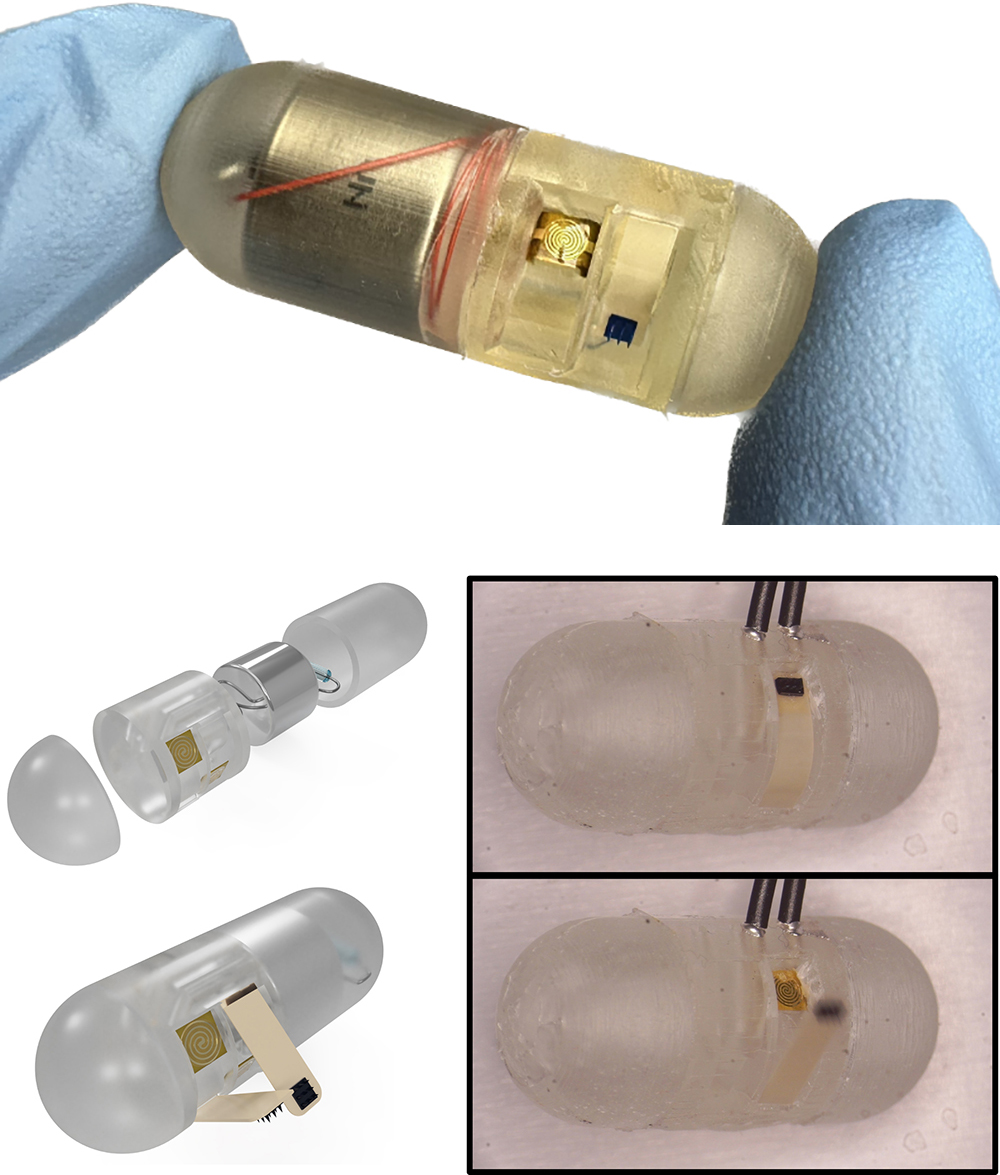
New features on ingestible capsule will deliver targeted drugs...
Stories / March 14, 2024
Clark School Research Nominated for “Invention of the Year”
Stories / February 19, 2024
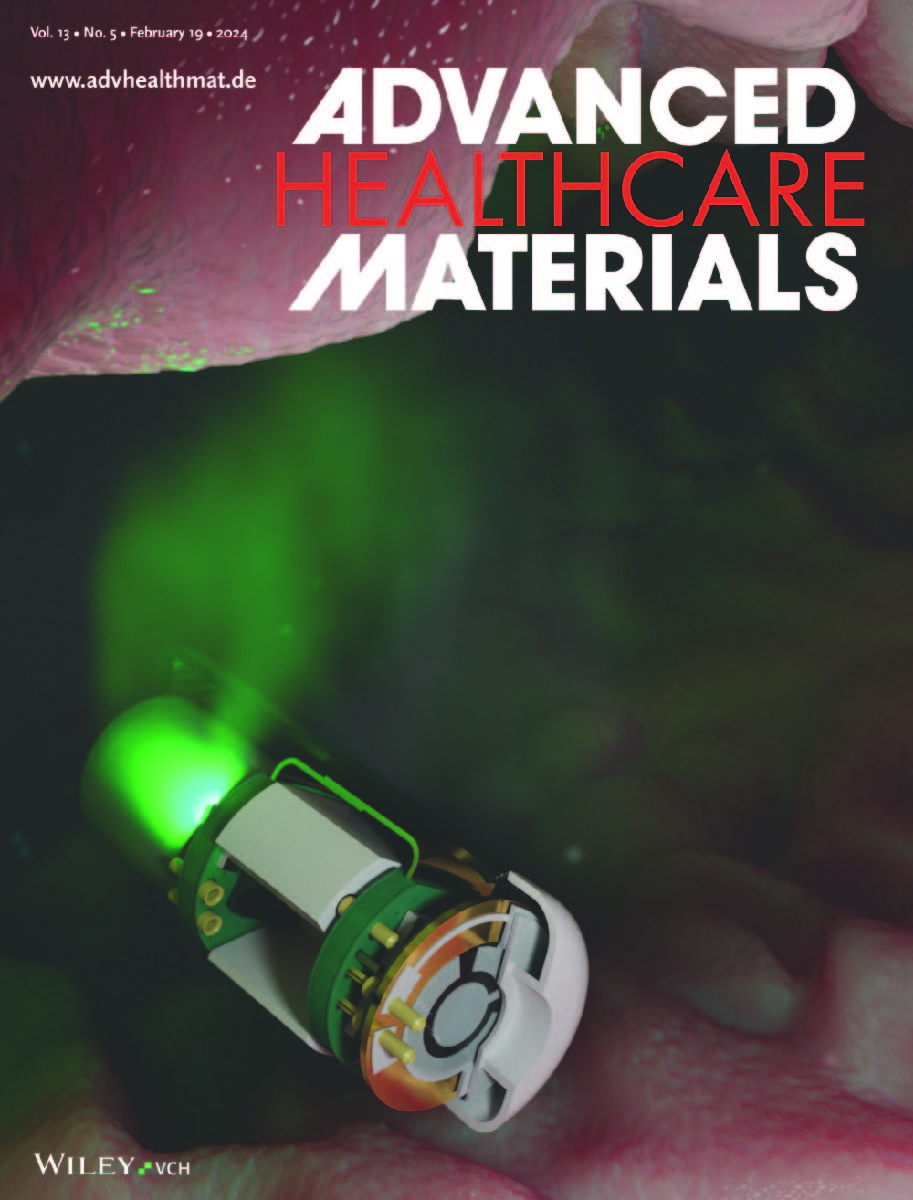
Ingestible Capsule Technology Research on Front Cover of Journal
Stories / December 14, 2023
Gut Health Monitoring Gas Sensors Added to Ingestible Capsule...
Stories / March 31, 2026
NIH Funds "Smart Pill" for Gut Health Monitoring

Stories / June 26, 2025
Adjustable Drug Release Marks New Milestone in Ingestible...
Stories / February 26, 2025
Sydney Overton receives Graduate School’s Outstanding...